

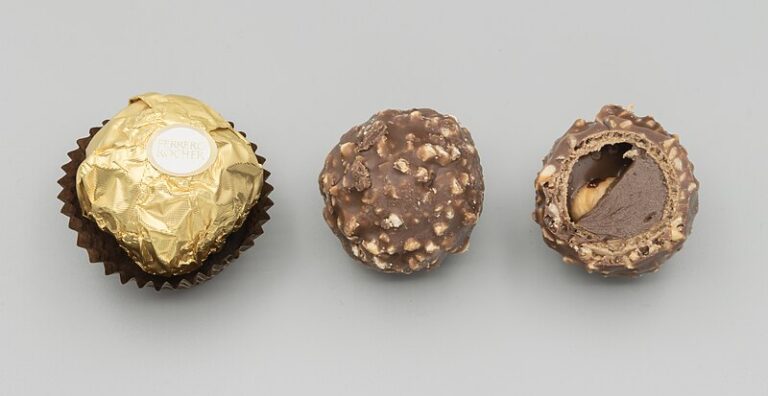
Today, 26 April, is World Intellectual Property Day. The aim is to make businesses ever more aware of how important it is to protect their intellectual property and their stock of ideas, especially when they move into international markets.
Intellectual property and exporting to China
With clients who are starting out with us on their path to internationalisation in China, we often focus on how to assess whether China is the right market, how to take the first steps, how to get known and how to set up partnerships, and it is easy to skip the more “boring” parts such as intellectual property.
It is no secret that Chinese manufacturers are rather good at copying and at producing “genuine fakes”, such as “Rollex” watches, “Cuggi” bags or “Adidos” tracksuits. But it would be a mistake to think the problem is confined to fashion and luxury, and the story I want to tell you today will make you think about how real the risk of having your brand identity “stolen” is, whatever sector you work in.
The Ferrero case
“Ambrogio, I’m feeling a little peckish.” Every Italian knows that line from the famous 1980s and 1990s advert that made Ferrero Rocher a household name.
But this chocolate has not only made Italian mouths water: like Nutella, it has become famous all over the world, including in China, which is where the misadventure I want to tell you about begins.
Spot any similarities?
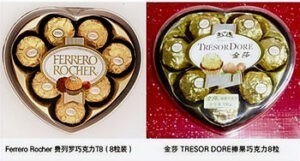
The Chinese copy of Ferrero Rocher
In China, Ferrero Rocher did not succeed on taste alone: consumers were won over by the golden wrapper and the elegant box, which make it a perfect gift for any occasion.
That success did not go unnoticed, and the Chinese company Montresor thought it could profit by making its own chocolate pralines, called Tresor Dore, which looked suspiciously like Ferrero’s, and packaging them in the same way, right down to the gold foil and the little name label on top.
These pralines, however, proved a great disappointment both to the unfortunate people who tasted them and to Montresor itself, which had miscalculated. Ferrero did not let the matter drop: it took Montresor to court and won in 2008, with token damages of €50,000 and the immediate withdrawal of Tresor Doré from the market.
How to protect intellectual property in China
Meanwhile the world market is still being flooded with Chinese products that are identical in every respect to existing ones, and fighting the knock-offs, if you don’t have Ferrero’s legal firepower, remains very difficult. So what can you do?
One of the first things we advise our clients to do is think about how their brand identity translates for the Chinese market (logo, colour, a name with the right connotations…) and register it before entering the Chinese market.
The same goes for technological innovations, for which we also recommend applying for a patent that is valid in China too.
These precautions will help prevent anyone acting in bad faith from appropriating your trade marks or exploiting the results of your research and development without authorisation.
So, whether you want to protect your brand identity or a patent on software you have developed, if you are looking for help from a law firm, choose one with previous experience of working in China.
At Mallei, together with our partner East Media, we can help!